
Welcome to this latest edition of our Workbench blog and all the news, updates, and modelling exclusives from the fascinating world of Airfix.
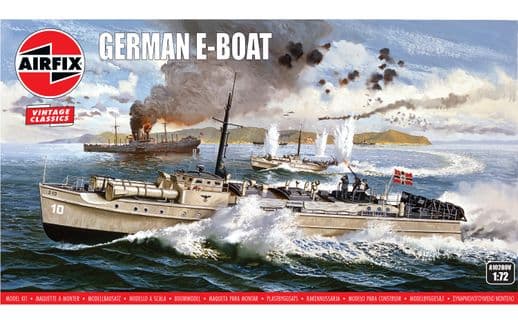
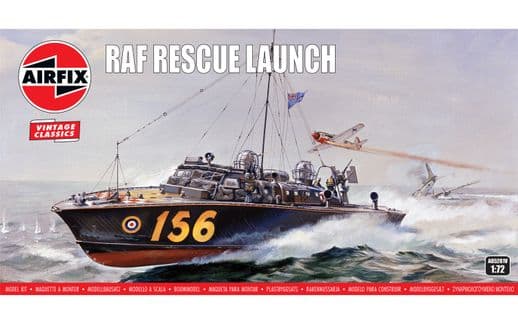
We have something very different as our subject matter up for review this time around, as we prepare to welcome the first of three appealing High Speed Craft additions to our Vintage Classics range in 1/72nd scale. Some of the most impressive kits to have ever taken their place within various Airfix ranges, and models which make highlight additions to any collection of built kits, the first anticipated arrival of the three is the RAF Rescue Launch, a series of high speed vessels which plied their trade in the English Channel, North Sea and whilst stationed on overseas deployments.
Real speedsters of the seas, these vessels were not only dedicated to the rescue of downed airmen forced to ditch or bail out at sea, but could also be required to support wider Royal Naval operations on occasion, bringing their great speed and impressive firepower to bear in either a defensive, or offensive capacity.
A fascinating subject which has resulted in the creation of this truly classic Airfix kit, we will see how these ‘Spitfires of the Sea’ possessed more than just a passing connection to Britain’s aviation industry, along with how the use of the RAF roundel was more than just for decorative purposes.
With an impressive selection of built model images to illustrate this latest feature, and two appealing scheme options for us all to discover, please join us as we step aboard some of the most impressive boats to have ever launched from a UK boat house in this latest edition of Workbench.
An iconic series of High Speed boats has resulted in the creation of a classic Airfix model kit – how spectacular do these two builds look?
As an island nation, the history of Britain has been forged by the sea, with the coastline providing the population with a natural line of defence against invasion, and shipbuilding becoming a skill on which generations depended. Possessing a strong navy has long been a proud British tradition, and when not defending our coastline from attack, it was extending the influence of Britain right across the globe, quite literally ruling the waves as they went.
The sea would also play an important role in the development of modern aviation, and ultimately lead to the development of the greatest fighting aeroplane the world has ever seen, the Supermarine Spitfire, but rather than linking this to the famous name of Reginald Mitchell, for the purposes of this week’s feature, we’re going back to his original employer, Hubert Scott-Paine. A man who was fascinated by speed, and capable craft both on the water and in the air, Paine purchased the yacht factory at Woolston where he was employed as manager in the 1916, subsequently renaming it the Supermarine Aviation Company.
The company would become successful in producing flying boats for the Admiralty, however, the appointment of Reginald J Mitchell as an engineer that same year would transform the fortunes of this ambitious company, along with those of its forward thinking owner. A series of new aircraft designs followed, including the Supermarine Sea Lion I which competed with distinction in the 1919 Schneider Trophy competition, and the Sea Lion 2 which took first place in the 1922 race.
With the company now attracting international interest, Paine sold his stake in the Supermarine company in 1923, making him an incredibly wealthy man in the process, but with his ambition for speed and engineering excellence remaining undiminished. After spending the next few years racing and pursuing all manner of sporting ventures, he purchased the Hythe Shipyard in 1927 and formed the British Power Boat Company. The company would become expert in designing and producing racing boats and fast cabin cruisers of distinction, with his ‘Miss England’ boat winning the world championship over a US rival at Daytona Beach in 1929.
Eventually, Britain managed to establish a coherent Air Sea Rescue service for the rescue of downed airmen.
The experience gained in producing these speedy craft led Scott-Paine to explore the military potential of his boats, loaning the Admiralty one of his new vessels for trials purposes. This led to an order for the production seaplane tender cruiser, a vessel used to service one of the many seaplanes Britain had in service at that time. Trials of this vessel were carried out by Aircraftsman T.E Shaw (Lawrence of Arabia), who had a keep interest in this type of speedy vessel, after he had witnessed men drowning because the boat sent to save them was too slow in the water. This collaboration was the start of an incredibly successful period for the British Power Boat Company, and result in the production of a series of fast and powerful vessels for civilian and military use.
Scott-Paine knew that for many military applications, great speed would be required to get the vessels to their intended locations, or to deliver a blow to enemy shipping and make good their escape before the enemy had chance to react. In support of this, he designed his High Speed Vessels using lightweight construction, but utilising patented composite bonding techniques to give the boats great inherent strength. A stepped hull allowed the bow of the boat to rise out of the water when travelling at speed, thus reducing the resultant wave and enabling the boat to push on to greater speeds.
Modified aircraft engines were also used for propulsion, meaning these boats were fast and noisy, like some sort of waterborne fighter aircraft, with the throaty roar of their engines only serving to underline their impressive performance. Hubert Scott-Paine would sign contracts which allowed his craft to be built under licence in America, Canada and Australia, and he even produced a seaplane tender for a German flying boat base.
The first orders for his new Motor Torpedo Boat designs were received in 1935, as the Admiralty were finally convinced that large numbers of these boats would be needed both to challenge enemy shipping activities around the British coast, and for mounting their own attacks against enemy shipping. The production and delivery of these vessels took on a new urgency and in addition to those produced by the British Power Boat Company, rival boats built by Vosper and Thornycroft were also produced in large numbers, but with Scott-Paine’s designs also going on to find favour with the American government. In fact, quite a variety of vessels were produced for all branches of the British military during the second half of the 1930s, from seaplane tenders to the high speed launches they became famous for.
There was a good reason why these speedy vessels sported Royal Air Force roundels.
The establishment of the Royal Air Force in 1918 also brought about the creation of the Royal Air Force Marine Branch, the role of which was to administer and operate the large number of marine craft which currently serviced the seaplanes in service with the new combined force. These vessels ferried crews and stores from shore to seaplane, kept waterways clear of debris and provided rescue and emergency support for flying boats, and with many stations positioned around the country, a force of between 300 and 500 vessels was under their control.
During the inter-war years, the innovative designs created by the British Power Boat Company saw the introduction of a new breed of High Speed Launches and Motor Torpedo Boats which transformed the service, however, once forced to operate during wartime conditions, were quickly found to be vulnerable to enemy attack, and also less than ideal when it came to plucking downed airmen from the sea. Further designs refined and improved the capabilities of the RAF Marine Branch craft, with some of the most famous vessels being the Type Two 63ft HSL ‘Whaleback’ boats, which featured defensive armament which included two Armstrong Whitworth AW38 gun turrets, making these rather unique looking machines.
When Britain was dragged into the Second World War, like all branches of the military, the RAF’s Marine Craft Section was ill-prepared for war, and with great pressure being placed on the production of armaments and aircraft, addressing this situation was pedestrian at first. Contrary to popular belief, during the Channel air battles of 1940 just prior to the Battle of Britain and during the battle itself, Britain’s ability to rescue downed airmen in the English Channel was disjointed and best, and arguably not fit for purpose. The few High Speed Launches which were available were usually assigned to Coastal Command bases, and getting to downed airmen in time was very much in the lap of the gods.
RAF HSL 130 (the second scheme option with this release) in the process of rescuing the crew of a ditched Bomber Command Halifax off the coast of the Isle of Wight in 1942.
Due to the advanced nature of these craft and the powerful engines they used, only a fraction of the flotilla was available at any one time, and it was reported that these expensive engines only had a service life of 360 hours at best. Statistically, a pilot bailing out into either the North Sea of the English Channel during this period only had a 20% chance of being returned to their squadron, and it’s thought that during the main period of the Battle of Britain, the Royal Air Force lost well over 200 pilots to the seas, something of a disaster for the force.
In contrast, the Luftwaffe had planned for operations over the English Channel and whilst in no way perfect, had establish arrangements for the saving and recovery of downed airmen. In addition to a seaplane force and their own fleet of service and rescue vessels, the Battle of Britain led Generalluftzeugmeister and Generaloberst Ernst Udet to instruct German companies to produce a large number of autonomous rescue buoys, to be deposited at locations in the English Channel. The idea behind these Rettungsboje or ‘Udet Buoys’ was to provide a safe haven for downed airmen in open water until they could be rescued by one of the many vessels patrolling the area, with everything they could need to keep them safe and comfortable until such a rescue was possible.
Large numbers of these steel floating life savers were positioned at fixed locations across the Channel, and could comfortably accommodate four people with everything they might need for several days, of until they could be rescued. Food, dry clothes, medical supplies and even bunkbeds were available inside the rescue buoy, along with an alcohol stove to enable them to make hot food and drinks to warm them after their unexpected Channel dunking. As the buoys were positioned at fixed locations, they could be checked several times each day and if occupied, a system of flags by day and lights by night, highlighted the fact that the buoy was occupied and needed the attention of a passing rescue boat.
With these floating havens being intended for use by those in peril at sea, they made no distinction between nationalities, although I have found it difficult to find definitive information as to whether the Luftwaffe’s Rettungsboje were used by Allied airmen during the war – surely, they must have been. In the wartime film ‘One of our aircraft is missing’, the crew of an RAF bomber were filmed on an Udet Buoy, although no commentary was provided to suggest the craft had been built by, and intended for use by German service personnel.
History is just so fascinating. Both artistic and modelling representations of the unusual Luftwaffe Rettungsboje rescue buoys which were deployed in the English Channel.
The British would later copy this ingenious solution to a very real problem, by commissioning the production of 16 ASR-10 rescue floats, which whilst looking very different to their German equivalents, were quite similar in the facilities they provided. Nicknamed ‘Cuckoos’ by those who saw them, all 16 of these floats were built by the Carrier Engineering Company of Wembley during 1941, with the same company also going on to recondition four captured German Rettungsboje, which were repurposed for British use – is it any wonder that we find information such as this so fascinating?
The poor performance of British rescue services at sea during the Battle of Britain period resulted in an official review taking place in 1941, with the Admiralty actually offering to take over the service in its entirety, however, it was subsequently decided that the Royal Air Force would establish a dedicated Air Sea Rescue service, and provide a coordinated and well organised network of rescue support for downed airmen and naval personnel stranded at sea. They also initiated specific training for all aircrews, providing them with dedicated survival equipment and significantly improving their chances of surviving the trauma of a sea ditching.
Airfields such as the one at Bolt Head on the south Devon coast, worked in unison with the RAF Marine Craft station at Salcombe to affect the rescue of downed airmen, with specially equipped Spitfires racing to the reported location, dropping a life raft if required, and communicating the exact location to the RAF launch which was now speeding towards the position. Other aircraft such as Lysanders and Supermarine Walrus amphibians were also used, and if the seas were calm, the Walrus pilot may even elect to land on the water and rescue the airman itself, but only if they felt the aircraft would be able to safely take off again.
This was the beginning of the Air Sea Rescue service the nation holds dear to this day.
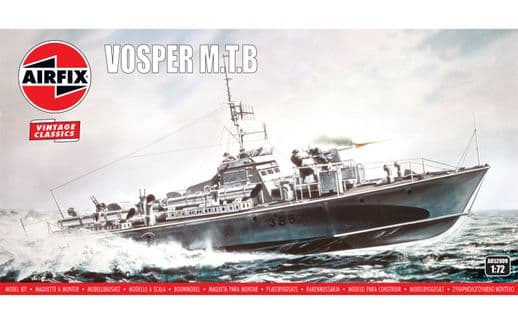
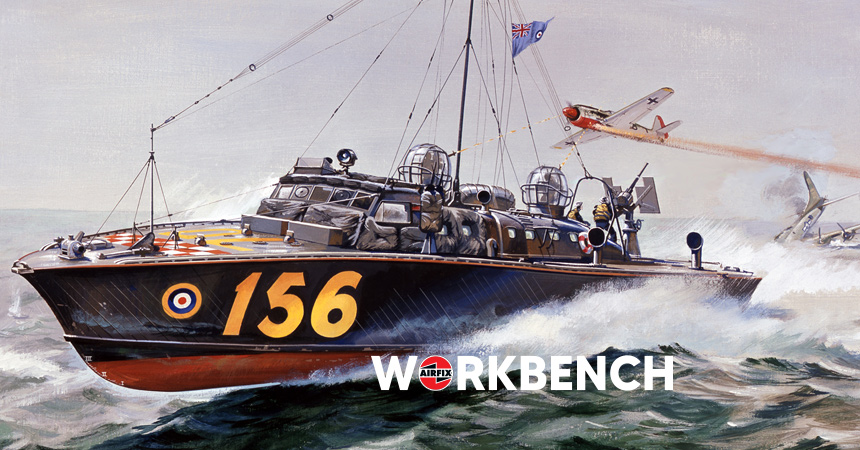
Classic Airfix artwork for a classic Airfix model kit. It’s great to have this magnificent kit as part of the current Vintage Classics range.
When talking about Airfix kits which possess interest and character across every single plastic part, this magnificent model has to be up for consideration, and no matter what your usual favoured modelling subject matter might be, this 1/72nd scale RAF Air Sea Rescue Launch is a project most of us would love to take on. First released as a new tooling addition to the range in 1978, this spectacular kit was an instant hit with the modelling world, and no doubt a great many Workbench readers will have fond memories of building and display one of these beautiful models as part of their collections.
The British Power Boat Company 63ft High Speed Launch Type 2 was the second generation of a range of high speed launches produced for the RAF during the mid 1930s, and whilst being both fast and capable craft, suffered in use from a lack of armament, making them vulnerable to enemy action. Early combat experiences led to the modification of the design and the production of the Type 2 ‘Whaleback’ craft, vessels which were the first to be armed from the outset, replacing the Type 1 vessels on the production line after just 22 boats had been completed.
Featuring a design perfected by the British Power Boat Company for high speed operations over water, the construction of the hull featured a hard chine design and utilised a double diagonal skin of African mahogany planking with a layer of proofed canvas material in between. The bow section was of lightweight construction, however the business end of the boat was built to be much stronger, enabling it to withstand the forces inflicted on the boat when operating it at great speed. The wheelhouse and cabin were built utilising the British Power Boat Company’s patented synthetic resin bonded construction process, and the hull was subdivided into six watertight compartments by five bulkheads.
Another view of one of the built models finished in the lead scheme of the two on offer with this latest Vintage Classics kit release.
These majestic vessels were propelled to speeds of 40 knots by three fuel hungry 500 hp Napier Sea Lion petrol engines, which were naval derivatives of the successful Napier Lion aero engine of the 1930s. With a range of 500 miles, crews would find themselves standing on or around large quantities of fuel during each and every sortie, something which must have focussed the mind somewhat.
Defensive armament was initially single .303 Vickers or Lewis machine guns mounted in each of the two Armstrong Whitworth turrets, but after boats were badly shot up by Luftwaffe aircraft, were augmented by a pair of twin Vickers machine guns on free mountings, and a much more capable 20mm Oerlikon cannon mounted towards the stern of the boat. Some Whalebacks also carried Browning machine guns, which could also be placed on free mountings for self-defence.
These were extremely capable craft indeed, and with their aviation heritage, were known as the ‘Spitfires of the seas’, craft which were much loved by their crews. The noise generated by the Napier engines must have been tremendous, and whilst probably challenging for the crews having to work with it, must have been the most glorious sound ever to airmen who had been forced to take a dip in the English Channel. From 1941 onwards, these vessels would help to create a coordinated and effective Air Sea Rescue service, with many hundreds of airmen owing their lives to the RAF’s fast rescue boats.
As they were operated as a branch of the Royal Air Force, crews aboard these speedy vessels were given RAF ranks, both for enlisted men and officers. A crew would typically comprise of nine men, which would include the captain (usually a Flight Lieutenant, or Flying Officer) and a medical orderly, however, whilst there was space for around five stretchers to be carried on board, other than cleaning wounds and administering basic first aid, it was usually expected that casualties would be treated on land, once the Whaleback had sped back to its home station.
Early boats of this class were painted in a high visibility scheme to make them easily identifiable to both downed airmen and other rescue services, however, this scheme also made them juicy targets for marauding Luftwaffe aircraft or German patrol boats, so this later presentation of these boats is a toned down version of those first boats in service. Manufactured to the highest standards and maintained meticulously, these beautiful craft helped to establish a coherent Air Sea Rescue service around Britain’s coastline, and by the time this scheme option was in service, was working effectively in conjunction with airborne units, making sure as many downed airmen as possible could be saved. Ultimately, it’s been estimated that over 1200 airmen were saved by RAF High Speed Launch operations during the Second World War.
Full scheme details for this later war representation of an RAF Whaleback
This first scheme option offers two different HSL options from the latter stages of the war in Europe, with HSL 156 being the vessel commanded by Flying Officer Geoffrey Lockwood, a boat which operated out of No.28 ASR unit at Newhaven during 1943 and 1944. Involved in numerous rescues, perhaps the most notable of these occurred in October 1944, when the crews of two downed USAAF Boeing B-17 Flying Fortresses were rescued, having come down in the middle of a minefield.
Crews were proud of their rescue achievements, and would often paint success marking on their boats, similar to the victory markings carried by fighter pilots on their aircraft. These would usually feature the national insignia of the crew rescued and the number of souls saved, something individual crews were incredibly proud of. Not managing to get to downed airmen in time was obviously a different story entirely, however, such occurrences diminished greatly in number the later the war progressed.
The second option with this first scheme is HSL 127, a boat which was from the first construction batch produced for the Royal Air Force, but one also sharing this later presentation of RAF HSL craft. This Whaleback served during the failed Allied landing attempt at Dieppe in August 1942, and is known to have saved over 100 airmen during her wartime service career, including twenty men from a glider which was forced to ditch in the English Channel in September 1944. Earlier in the war, she was involved in the rescue of a Short Stirling crew forced to ditch in the North Sea after being attacked by German nightfighters, having its rear turret shot off during the engagement. They were helped by a Beaufighter which dropped supplies and loitered until the HSL could get to the location.
She is unusual as being one of the last surviving examples of these vessels, surviving the war and going on to see service as a luxury motor launch during the post war years.
Another vessel which was from the first production batch manufactured for the Royal Air Force, HSL 130 was in service during the reorganisation of Britain’s Air Sea Rescue service, through some of the less successful times in the service’s history. Initially, these boats were stationed around the southeastern coast of Britain, in an area which was colloquially referred to as ‘Hellfire Corner’, by virtue of the sheer volume of combat action this region experienced. As this location was close to where air combat was taking place and therefore where Fighter Command airmen might be forced to take to their parachutes, so it made sense for High Speed Launch crews to be stationed for maximum effect.
As you can see from the earlier presentation of this boat, these first Whalebacks didn’t feature the later additional armament added to the boats, relying on the two Armstrong Whitworth turrets and their single machine guns for defence. They were also finished in a more visible scheme, something which the authorities thought would help with recognition and the coordination of rescue attempts, but was later found to also help Luftwaffe pilots spot and subsequently attack the vessels, with several sustaining quite significant damage in the execution of their duties. The addition of more and heavier armament may have increased the overall weight of these boats, but certainly also helped with their survivability and mission effectiveness.
Initially, HSL Stations would receive a scramble request and location details from a number of sources, which may include a radio message from the downed airman himself, information relayed from one of his squadron mates who was remaining in the area, or from one of the many ships using the Channel at the time, speeding to the location which the crew hoped was accurate and had not seen the airman drift too far. Indeed, the sheer number of vessels using this busy stretch of water was one of the main reasons why military officials had originally elected not to establish a dedicated Air Sea Rescue service, as they felt that the crowded shipping lanes of the Channel would be more than enough to pick up any downed airmen, an assumption which quickly proved to be wrong.
Manufactured in the first production block for the Royal Air Force, this high visibility scheme proved too tempting for Luftwaffe pilots. It’s also in the original configuration with just the pair of Armstrong Whitworth turrets for defence.
Once the HSL Stations were working closely in conjunction with nearby Air Sea Rescue airfields, the situation began to get much better. Obviously retaining all the existing methods of locating downed airmen, these ASR dedicated aircraft were equipped with life saving equipment, locator markers and the ability to accurately direct launches which were speeding to the location, often remaining on station until seaborne help arrived.
Aircraft such as Boulton Paul Defiants, Westland Lysanders, Spitfires, Hurricanes and of course the Supermarine Walrus were all used in this role, however, whilst many assume that if a Walrus amphibian was involved in the rescue it would simply land alongside the stricken airman and complete the rescue, this could only be achieved if the waters were relatively calm, and if there weren’t too many men to pick up. There were numerous occasions where a Walrus had to make its way back to land on the water but under its own power, or having to be towed back by the High Speed Launch sent to assist in the rescue. The only thing that mattered though was that the aircrews were rescued and could later return to active duty.
This particular Whaleback was built at the British Power Boat Company’s Hythe boatyard and appears to have been quite the photographic celebrity during its extensive service life. Pictured travelling at speed with its bow rising imperiously out of the water for publicity pictures at Calshot in 1943, it was also pictured whilst in the process of rescuing the crew of a ditched Halifax bomber off the Isle of Wight the previous year. Operating from the station at Yarmouth on the Island, the pictures were taken from a Coastal Command Lockheed Hudson from No.279 Squadron, clearly in an attempt to document just how effective the RAF’s Air Sea Rescue service had become.
Sixty-nine of these impressive vessels were produced for the Royal Air Force between 1940 and 1942, the majority of which remained in service for the remainder of the Second World War. By the time of D-Day, the entire force of RAF HSL craft totalled some 300 boats in service in home waters and where RAF aircraft were operation overseas.
A most welcome addition to the Vintage Classics range, the RAF Air Sea Rescue Launch really has to be considered an Airfix classic, and the first of three 1/72nd scale high speed boat additions to the 2025 range.
This fascinating combination of aircraft and racing boat technologies not only resulted in the introduction of this distinctive series of High Speed Launch craft, but also provided Airfix development engineers with a kit subject which has inspired modellers for the past 47 years or so, a true Airfix Vintage Classic of a kit. As with several of the releases in this range since it was launched in 2018, we don’t expect this particular classic to be around for long, as every kit stash really should have at least one example of the RAF Rescue Launch within it.
We’re delighted to confirm that we’ve just taken delivery of this magnificent kit, which is currently showing as being ‘In Stock’ on the Airfix website – grab one while you still can.
We're afraid that's all we have for you in this latest edition of the Airfix blog, but we will be back next Friday with more project development updates and the very latest Airfix kit exclusives. In the meantime, we're always keen to hear your views on all things Airfix and in particular, any thoughts and opinions you may have regarding our Workbench blog. If you would like to drop us a quick line, could we please ask that you use our workbench@airfix.com email for all correspondence.
To re-visit any of the Airfix blogs we have produced over the past TEN years or so, please head to our main Workbench hub, where you'll find our entire blog back catalogue and all the Airfix design projects we have already covered.
All our dedicated official social media sites can be accessed by clicking the respective link icons at the foot of this page, or by heading to the Airfix homepage. Other useful Airfix links are:
Facebook, YouTube, Twitter and Instagram official sites
Please join us for more Airfix updates next week and thank you for your continued support.