


Welcome to this first edition of our Workbench blog for 2026, and all the news, updates, and modelling exclusives from the fascinating world of Airfix.
In the previous edition of Workbench, we began our review of new Airfix model kits for 2026 by looking at the recently announced Airfix Club kit for this year and our 1/72nd scale tribute to this year’s centenary commemorations of the Svenska Flygvapnet, Swedish Air Force 100. As this new kit appears to have been particularly well received, we wanted to keep the new kit momentum going in this latest edition, by bringing you our annual range launch review edition, an unashamed celebration of all the recently announced new Airfix modelling delights.
As the dust has now settled on our latest range introduction event, we wanted to take this opportunity to look at some of the 2026 projects which are going to be capturing our attentions over the coming year, hopefully including some of the kit subjects our readers have been hoping we were going to include in our range at some point. We will be looking at new tooling projects, recently released kits which now feature new parts and scheme options, and of course, the return of some much loved classics, but each one an enjoyable build project in the making.
For those of us who haven’t yet seen it, we will be embedding our latest range launch video into the body of this latest blog, where our Head of Brand, Dale Luckhurst, takes us through the finer points of our latest range, the continuation of a proud Airfix tradition which has been captivating modellers for many a year.
It’s new Airfix model kits galore in this latest edition of Workbench.
Still an important part of the Airfix story, getting our hands on a printed copy of the Airfix catalogue is a tradition which goes back many years for a great many people.
Just three weeks into the new year, and the fun, enjoyment and excesses of the Christmas holidays already seem like a million miles away. As everyone tries their best to negotiate the choppy waters of any new year and their return to work and normality, the Airfix team have long been the custodians of an effective method with which to offset the impact of the January blues, our latest Range Launch event. With a new collection of model kits scheduled for release over the coming twelve months, our latest crop of headline new tooling releases joining existing kits which now feature new parts, and our usual impressive selection of much loved kit classics, we always aim to include something for every modelling taste in our range announcement, but always to provide an enjoyable distraction to the trauma of returning to everyday life.
Every single member of the huge Workbench family will have their own version of the role Airfix, and the modelling hobby have played in their lives, and how for some of us, range launch day was very different, back in the day. Whilst we currently try our best to avoid internet traffic causing the Airfix website to give up the ghost, those of us who had been infected by the modelling bug throughout the 1970s and 80s had a very different experience on range launch day. Back in those carefree days, range launch was effectively new catalogue release day, a terminology I initially struggled to let go of when first joining the company back in 2015.
For the online team back then, range launch day was the culmination of many months of work for them, and even more work undertaken by the Airfix team, particularly the designers. I must admit, back then, my mind immediately went back to catalogue launch morning, and me taking my place in a long snaking queue which began at the door of my local model shop in Oldham town centre, and the hope that there was still a copy left for me when I eventually made it to the front. Of course, I would always have a bob or two in hand to secure my latest kit acquisition, just to make the day doubly memorable.
I’m not sure if the current digital world is more enjoyable than the slightly more hands on experiences of my youth, but it’s certainly much more convenient, more immediate and more inclusive, because when we go live with range launch now, everybody can see what we have planned for the coming year, no matter where they are in the world, or how close they might be to the nearest model shop. Nevertheless, even though most people will browse the catalogue and make their next build project selections using their mobile phones and computers these days, for some of us, there’s still something really special about getting our hands on a copy of the printed catalogue, with the familiar look, feel and smell of the catalogue being a much-loved tradition, something which is just as much a part of our modelling enjoyment as opening the box of a new model kit is.
So, what delights do we have to tempt the modelling world over the coming months, and which new models are already showing themselves to be the pacesetters when it comes to the popularity chart?
Anniversaries and kit collections
There are two well-known and time honoured factors in evidence when it comes to selecting a model build project. Firstly, we love an engaging story, and when this is linked to a model kit release, or our scale modelling representation of it, then that’s often the only inspiration we need. Secondly, any kit offering which offers more than one kit inside its appealing packaging will always get our vote, something which can trace its beginnings back to the Dogfight Doubles kits we were just so incredibly popular during our formative modelling years.
This year’s range includes several interesting multi kit offerings, some which commemorate significant Second World War anniversaries this year, with others commemorating significant aircraft, or the people who flew them. When it comes to kit offerings on a grand scale, few will be able to match the potential possessed by the re-introduction of our Sink the Bismarck Gift Set, a multi warship kit set which will help to commemorate one of the most significant naval engagements of the Second World War, one which took place 85 years ago this coming May.
The mighty German Battleship Bismarck was one of the most advanced warships the world had ever seen, and posed a significant threat to Atlantic convoys and Britain’s vital naval supply lines. She had to be destroyed at all cost, and the loss of the British battlecruiser HMS Hood during the Battle of the Denmark Strait on 24th May 1941 resulted in a powerful British task force steaming headlong towards Bismarck to that end.
With her rudder damaged by a torpedo strike from one of HMS Ark Royal’s Swordfish biplanes, the crew of Bismarck couldn’t make good their escape and awaited their fate, each man determined to fight to the end. When the British ships arrived, they pounded their huge German target with 2,800 shells fired, and at least 400 of them finding their mark. Destroyers also moved in to unleash their torpedoes and unable to resist any longer, Bismarck slipped beneath the Atlantic Ocean on 27th May 1941.
Not the artwork created in support of our Pearl Harbor gift set, but one which is in the 2026 range, and one which perfectly illustrates the monumental events of that historic day.
The back end of this year will also see the world commemorating one of the most infamous episodes of the Second World War, but one which resulted in America’s entry into the war, ultimately dictating its eventual outcome, the Pearl Harbor attack. Launching aircraft from six carriers in two attack waves, over four hundred strike and fighter aircraft targeted the US Pacific Fleet which was moored at Pearl Harbor, and the airfields at Ford Island, Hickam Field, Bellows Field and Wheeler Field. Despite inflicting significant damage on their targets, America would resolve to avenge this infamous attack and destroy the Japanese war machine.
At Haleiwa airfield, Lt. Kenneth Taylor and Lt. George Welch famously climbed into the cockpits of their P-40 fighters and took off under a hail of enemy machine gunfire, before launching into a furious defence of their airfield. Claiming several Japanese aircraft destroyed, the pair landed at Wheeler Field and ordered ground crews to re-fuel and re-arm the aircraft. Despite being ordered to remain on the ground, the pair took to the air once more, as the airfield again came under further Japanese attack, with both men again managing to shoot down enemy aircraft. Despite their heroic efforts, the Americans lost some 188 aircraft destroyed and a further 159 damaged, during the two Japanese attack waves. Japanese losses were to be just 29 aircraft destroyed during the Pearl Harbor raid, but this would only be the start of the American military response and there was much worse to come.
These historic actions are marked in scale form by the re-introduction of our Pearl Harbor gift set, which includes one of the P-40 fighters operated from Wheeler Field on the day of the attack, and two of the strike aircraft launched by the Japanese Navy.
Twin kit sets which come with a Typhoon warning
One of the most interesting new kit release announcements made in the 2026 range come in the form of our Eurofighter Typhoon FGR.4 Twin Pack kit offerings, fantastic aircraft kit pairings wearing distinctive and historic schemes. The Royal Air Force Typhoon Display Team aircraft is one of the undoubted highlights of any display season, but since 2015 and the 75th Anniversary commemorations of the Battle of Britain, each display Typhoon has taken on something of a mythical status, becoming an aviation celebrity in its own right.
Already popular with Britain’s army of aviation enthusiasts, the Eurofighter Typhoon may be the nation’s airspace defender, but it’s also a consummate air display performer and display favourite, with its display pilot for the year becoming a celebrity figure with crowds and youngsters hoping to join the RAF when they finish school. In 2015, the RAF unexpectedly unveiled Typhoon ZK349 at RAF Coningsby wearing a scheme which took inspiration from the wartime Hawker Hurricane which was the mount of the only Fighter Command airman to be awarded the Victoria Cross during WWII, Flt Lt James Brindley Nicolson.
To say this aircraft became popular with the nation’s population would be something of an aviation understatement, with this aircraft being referred to as GINA, by virtue of the WWII codes (and roundel) she carried on either side of her fuselage. If anyone mentioned GINA, we all knew exactly which aircraft they were talking about.
This started a much loved tradition for Royal Air Force Display Typhoons, and over the next few years, two other machines would take over the role of being the RAF’s most distinctive, and most famous individual aircraft, ZJ914 ‘Blackjack’ and ZJ913 ‘Moggy’. Moggy was presented in a representation of a Hawker Typhoon ground attack scheme from around D-Day, whilst the patriotic Blackjack proved to be the longest serving of the special schemed Typhoons, in her striking red, white and blue livery.
This new series of kit pairings featuring the Eurofighter Typhoon and the aircraft which inspired their ‘Special Schemes’ unquestionably take inspiration from the hugely popular Dogfight Doubles of years past, and already seem destined to become some of the most popular releases of the year. Two kits in the same box, and all looking spectacular, with an interesting story to tell, that really does sound like a modelling project worth getting stuck into.
Returning classic kits
Sometimes, an impending aviation anniversary almost demands the return of a previously released kit, especially if it already occupies a position as one of our most popular releases of recent times. Although a little previous in terms of significant anniversary commemoration, the men and machines which took part in the incredible ‘Doolittle Raid’ of April 1942 demonstrated to the entire world that whilst America may have been a late entrant into the Second World War, now that they were committed, they were determined to emerge victorious.
Having endured the infamous and devastating surprise attack against their military installations at Pearl Harbor, America not only mobilised for war, but wanted to send a clear message to Japan that now the beast had been awakened, there was only ever going to be one outcome. On 18th April 1942, sixteen North American B-25B Mitchell bombers left the relatively short deck of USS Hornet and set course for Tokyo, set on mounting a dangerous, audacious and statement attack at the very heart of their enemy, sending a clear message that America was coming.
These aircraft were never designed to be operated from an aircraft carrier, however, led by the inspirational Lt. Col. Jimmy Doolittle, these volunteer crews sent shockwaves through the warring world, inspiring the Allied nations and steeling them towards ultimate victory. Each and every man would become an American hero, with their exploits still inspiring and enthralling to this day.
When it comes to distinctive US aircraft kits making a welcome return to the Airfix range, few could command the same attention as the Lockheed F-117A Nighthawk, a high-tech attack aircraft which underlines the importance airpower plays in the modern world.
One of the most unusual looking aircraft to have ever taken to world skies, the F-117 Nighthawk was one of the spectacular aviation creations of Lockheed’s famous ‘Skunk Works’, a high-tech attack aircraft which benefited from the latest stealth technology. Officially retired by the US Air Force in 2008, these secretive aircraft proved too valuable to do without and are still being used to fly their highly classified missions to this day.
If we’re looking for a kit build which is certain to turn heads once it takes its place within our model display, this returning classic might just be the one for us.
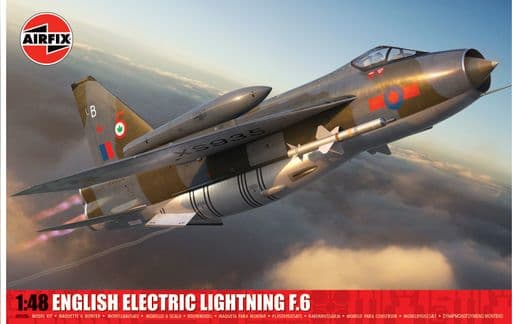
When it comes to making a kit re-introduction of significance at the start of a new year, Airfix really do know what they’re doing. Even though the modelling world was waiting patiently to inspect the contents of the latest kit range, we had been holding a modelling ‘ACE’ up our sleeves, a kit which so many people had expressed the hope of its return, that we knew we were on the right tracks. Even though our new collection of kits had thousands of people registering their interest in future releases, the kit they simply couldn’t stop themselves ordering immediately was our 1/48th scale English Electric Lightning F.6.
When it comes to significant British aircraft of the post WWII era, few can claim to have had anything like the impact that the English Electric Lightning did, a supersonic sensation which was originally introduced to protect Britain’s V-Bomber airfields against Soviet bomber attack. The ultimate incarnation of this flying hot-rod was the Lightning F.6, an aircraft which took all the performance of its predecessors, and presented it with even more speed, greater range and better handling, allowing this magnificent aircraft to post a stellar 28 year career with the Royal Air Force, through some of the most volatile times in world history.
The F.6 variant saw the return of guns to the Lightning, following their omission on the F.3 which preceded it, armament which complemented a pair of Red Top air-to-air missiles and was very much welcomed by serving RAF pilots. Although incredible speed was always something associated with the Lightning, pilots were always of the opinion that the aircraft was more than just a point defender, and was easily capable of dogfighting, as long as its cannon armament was retained.
The return of the Lightning has been a resounding success, and you can look forward to this being our first traditional blog update review for 2026 in the next edition of Workbench. For now though, it’s probably a good time to take a little break, allowing all those who have yet to see our latest range launch video to do so. Although we love nothing more than talking about our model kits here on Workbench, when it comes to a new model range, there really is no substitute for diving in and discovering all those new models for yourself.
We all have our own interests and preferences, so any review attempt is bound to come up short for some people, so that being the case, could we please ask if you would be so good as to spend a few moments in the company of our Head of Brand Dale, as he takes you on his traditional new Airfix range voyage of discovery.
Our new Special Duties Lysander kit will surely prove to be one of the most popular releases of the year.
Although every range launch will always comprise mainly of existing kits returning to the range either in the same, previously released iteration, or benefitting from new schemes and decals, the most exciting component of any range launch event unquestionably relates to new model toolings and recently introduced kits which are being made available with new part frames, allowing different variants of those kits to be built.
This year, we can look forward to several HOT items which fall squarely into this category, starting with the Westland Lysander in 1/48th scale, a kit which was warmly received when joining the Airfix range last year, but left many modellers asking when the ‘Special Duties’ variant of this distinctive aircraft was going to be released. The answer to that question is NOW, and its already clear that this kit is going to find favour with a great many people in our hobby.
Possessing exceptional rough field and short take-off and landing capabilities, the Lysander was just what the Army were looking for and following its service entry in June 1938, there were high hopes for the aircraft. Unfortunately, many of the design requirements incorporated into the aircraft were as a result of Great War thinking, but the war to come would be very different. Of the 175 Lysanders deployed to France with the British Expeditionary Force, 118 would be lost, with the aircraft unable to defend itself when faced with the Luftwaffe's Messerschmitt fighters.
The many fine attributes of the Lysander would later see it pressed into service as a clandestine aircraft, operating covert 'Spy Taxi' missions into France, in close cooperation with the French resistance. Operating under the cloak of darkness, aircraft would usually operate alone, with pilots having nothing more than a map, compass and the moonlight to aid navigation. Members of the resistance pre-selected a landing field and used a handful of torches to indicate where the aircraft should land, with the entire operation making full use of the Lysander's impressive STOL capabilities.
Everyone involved with these operations knew the Germans would show them no mercy if they were captured, as they were significant in providing essential intelligence to Allied military planners in preparation for the coming D-Day landings. These clandestine flights required levels of flying skill, bravery and tenacity which were only found in a select group of very special airmen.
The release of our SEPECAT Jaguar kit last year saw another long-requested model kit joining the Airfix ranks, and even whilst we watched as this new release found favour with thousands of modellers the world over, we knew we had more SEPECAT goodness for them just around the corner, in the shape of the two seat training/conversion variant of the aircraft. Already regarded as an attractive aircraft, the need to increase the length to the Jaguar to allow a second tandem cockpit to be added in this training variant only gave the aircraft a sleeker appearance, whilst at the same tame taking it closer to the role it was initially developed to perform.
Although the SEPECAT Jaguar actually started its development life as a joint Anglo-French project to produce an advanced new jet training aircraft for service with both nations, it would later become a highly capable strike platform, but with some aircraft further developed to undertake the pilot training and conversion roles. Always regarded as an attractive aeroplane, the tandem cockpit arrangement of the two seat Jaguars made these aircraft even more appealing from an aesthetic perspective, with many enthusiasts regarding the training variant of the Jaguar as perhaps the best looking of all Royal Air Force aircraft from the Cold War era.
This second release from our Jaguar tooling is destined to be just as popular as its predecessor, and we’re delighted to be playing our own small part in helping to preserve the legacy of this exceptional aeroplane, even if it’s only in scale form.
The final new model we’re going to be featuring in this New Parts section is nothing short of a classic, and as far as many in our hobby will think, is unquestionably the highlight release of the 2026 range. When it comes to significant aircraft types of the post war era, many would argue that the Westland Sea King stands imperious above all others, an aircraft type which finally proved the potential and operability of a modern helicopter, and one which would go on to see service with a great many world air arms.
From a public sentiment perspective and certainly here in the UK, no aircraft type has ever captured the affection of a greater proportion of the British public than the Sea King, specifically in this configuration, that of a life-saving sentinel. Whenever members of the public were in peril, the yellow Search and Rescue Sea Kings of the Royal Air Force were always there to come to our aid, be that a hilltop walk gone wrong, or a visit to the beach were the sea reminded us of its power and volatility. Whatever the situation, if we needed help, a Sea King would quickly be on the scene.
Many Workbench readers will have probably been on a crowded British beach at some time in their lives, enjoying their day as an RAF Sea King flew along its length. That sight would probably have been the catalyst for thousands of people spontaneously waving at the aircraft and its crew, a show of affection Sea King crews became very used to during the service life of the aircraft, and one which left them in absolutely no doubt as to how they were viewed by the British public.
From a helicopter model kit perspective, this is the one modellers have been waiting for, and if we thought our previous Sea King releases were popular, we’ll be needing to hold on to our hats with this one, because its already destined for ‘Classic’ status.
Although we have already covered many of the impressive new models scheduled to be joining the Airfix range over the coming twelve months, the subject which will always attract the most attention following any range launch event is that of new model tooling additions, and thankfully, we have lots to tell you about here.
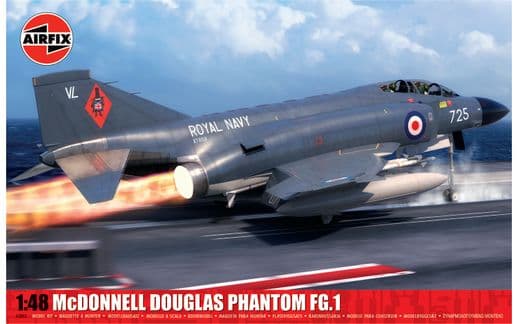
If we thought last year’s announcement of the SEPECAT Jaguar in 1/48th scale was going to have impact within the modelling world, could we possibly think of an announcement to rival it for this year’s launch – you bet we could! If you want to make a new model tooling announcement that will have thousands of modellers scrambling to hit that pre-order button, then you’d better have a 1/48th scale British McDonnell Douglas Phantom locked and loaded.
When we announced our 1/72nd scale Phantom FG.1 at Scale ModelWorld 2016, we did so to the delight of the hobby, with the only dissenting voices being those who told us that they wished we’d released it in the larger 1/48th scale. Well, it may have taken us a year or two, but your modelling wishes are our development command, so here’s your larger scale British Phantom, and you’re welcome!
As one of the most successful jet aircraft of all time, the American McDonnell Douglas F-4 Phantom was to see service with a number of overseas air arms, with Britain being a significant operator. Originally purchased by the Royal Navy as a modern replacement for their De Havilland Sea Vixens, Fleet Air Arm Phantoms would have the primary role of defending the fleet at all times and in all weather, with a secondary role of strike attack. Designated Phantom FG.1, these Navy jets certainly made for an impressive sight and were some of the most attractive aircraft ever to serve with Britain’s armed forces. Operating this huge aircraft from the relatively diminutive deck of HMS Ark Royal required a number of significant modifications to these Phantoms, as well as to the ship itself – they would also require the very cream of Britain’s fast jet pilots to operate these fighters successfully.
We know many of our readers will be keeping a keen eye on this particular project, but you can be sure that we’ll keep you updated on all the latest development advancements here on Workbench, as the Phantom advances towards eventual release.
In 1/72nd scale, we’re proud to announce that two significant new tooling projects will be joining the range in 2026, both aviation classics in their own right, and both incredibly distinctive designs within the wider history of aviation. Both subjects have previously been staple kits within the proud heritage of Airfix, but were both deserving of the attentions of one of our talented designers, bringing both aircraft types up to the model standards the current hobby would expect.
An aircraft which was the backbone of the Luftwaffe’s aerial transport force during the Second World War, the tri-motor Junkers Ju-52 ‘Tante Ju’ could carry 17 passengers in relative comfort for that period, and would help Lufthansa to establish early commercial routes right across Europe. Significant in its adoption of a corrugated magnesium/aluminium construction method, the Junkers Ju52 was reliable and extremely rugged aircraft, one which would go on to serve with distinction in many military roles. It would also be pressed into service as an airborne ambulance, paratrooper transport, glider tug, floatplane and even minesweepers, where they used a large metal degaussing ring under the fuselage, creating a strong magnetic field to detonate any Allied naval mines it flew over. Just under 5,000 of these aircraft were eventually produced.
Moving things forward to the exciting years for aviation which immediately followed the end of the Second World War, the Northwest of England would become home to an aviation project which was the envy of the aviation world, and aircraft which would become the English Electric Canberra.
Although the Lancashire based English Electric Company had gained plenty of experience in building aircraft during the Second World War, they were not aircraft they had designed themselves, so when they entered the design race to produce the replacement for the famous de Havilland Mosquito, many would not have expected them to be in the final running.
Establishing a young and talented design team, what they managed to produce was without doubt one of the most significant aircraft in British aviation history, a twin jet powered bomber which was aerodynamically clean and unmistakenly designed for great speed. Showing great promise right from the start, the Air Ministry were so impressed with the new aircraft that they placed an advanced order for 132 aircraft, so confident were they that the new jet would provide the Royal Air Force with a technological edge. When the first production B.2 entered service with No.101 Squadron in early 1951, few fighters of the day could catch the Canberra – the RAF had an exceptional new aircraft, one which was the envy of the world.
Not forgetting our 1/35th scale Military Vehicle range, these popular models also benefited from continued new tooling investment, with two models due to be released featuring new parts to allow different variants of those vehicles to be constructed, and one newly tooled kit making its debut in 2026. The incredibly popular Alvis Stalwart kit will be available in an Abbott self-propelled gun support vehicle, with its Atlas loader crane, a very different and distinctive variant of this most distinctive vehicle.
Not forgetting our Military Vehicle modellers, this range sees several new kit options added to the range in 2026, in addition to the return of some old favourites.
The ever popular British Cromwell Tank will be released this year with new parts to enable the Mk.VII and Mk.VI Close Support variants to be constructed, but our headline new release is the newly tooled Alvis FV603 Saracen armoured personnel carrier, another extremely distinctive vehicle which will grace many a scale Military Vehicle display following its release.
From a Workbench blog perspective, our commitment to you is that we will make it our mission to keep our readers fully informed as all these projects advance towards release, with development exclusives, designer interviews and the latest related imagery, as and when this becomes available. We will also be uncovering all the interesting stories behind each model release, highlighting why each and every one will make for an interesting and engaging model build project during 2026.
Classic models everywhere you look
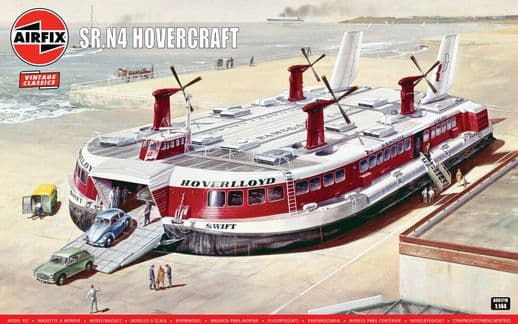
We’ve been waiting for the return of this impressive model kit since the Vintage Classics range was launched.
Now an established and much-loved section within any range launch event, the announcement of our latest Vintage Classics collection of kits is of great interest to many modellers, but possible of more interest to those who have many years invested in this fantastic hobby. With this range offering the opportunity to turn our hand at building some of the kits we all remember from the formative years of our modelling journeys, a Vintage Classics appearance can also see a kit returning to the range after many years away and in some cases, allowing access to kits which were previously only available by paying significant premiums on the secondary market.
A perfect illustration of this point is the return of the magnificent kit featured above, an impressive model which few of us modelling youngsters could hope to come across in our youth, but always seemed like one of the most impressive kits anyone could pit their modelling skills against.
The Saunders Roe/British Hovercraft Corporation SR.N4 was not only one of the most impressive Airfix model kits of its day, but it was our scale representation of one of the most impressive machines in service at that time, a massive hovercraft which appeared to possess unlimited potential for both civilian travel and military operations. Everything about the SR.N4 was impressive, with the technology employed allowing these mighty craft to have something of a go anywhere, do anything kind of reputation. As a consequence, it also made for a most impressive modelling project.
As we all know, variety is the spice of Airfix life, and nothing underlines that legendary subsect spread than the models inducted into the Vintage Classics Hall of Fame.
One thing every Airfix range offered the modeller was quality and subject variety, something which undoubtedly ensured that a large percentage of the nation’s youth were at one time or another, completely immersed in the world of Airfix modelling. Indeed, from an education and knowledge perspective, modelling helped to cement our understanding of technology and engineering, as the machines and inventions we were learning about in school were effectively brought to life within the Airfix range.
Whether it was a 17th Century galleon, or the latest ‘Jumping Jet’, the Airfix range had us covered and how we loved it. Other famous models being inducted into the Vintage Classics Hall of kit Fame during 2026 will be the cultured Mitsubishi KI 46 Dinah, the Shorts Skyvan and the airfield diorama essential Crash Recovery Set, a kit which was surely attempted by more modellers than most others, as we all began to improve our modelling skills, and looked for new ways to display our latest builds.
Even though we’ve attempted to provide something of a new model flavour of the latest Airfix range in this overview edition, there are so many kits we could, but didn’t have time to feature. That being the case, if we could ask for your support with one thing this Workbench weekend – if you haven’t already done so already, please head over to the Airfix website and spend a few enjoyable minutes discovering the finer modelling points of the 2026 range for yourself. Hopefully, you’ll find at least a couple of models which appeal to you.
We have much to look forward to in 2026 – happy modelling!
As far as Workbench is concerned, from next week, we will be getting on with the business of bringing our readers all the development details behind the individual model kits due to be released over the coming year. Our intention is to ensure that you find out all the latest information before anyone else does, and we really can’t wait to get cracking.
Let’s get stuck into Airfix 2026.
See you next week – same time, same place!
We're afraid that's all we have for you in this latest edition of the Airfix blog, but we will be back next Friday with more project development updates and the very latest Airfix kit exclusives. In the meantime, we're always keen to hear your views on all things Airfix and in particular, any thoughts and opinions you may have regarding our Workbench blog. If you would like to drop us a quick line, could we please ask that you use our workbench@airfix.com email for all correspondence.
To re-visit any of the Airfix blogs we have produced over the past TEN years or so, please head to our main Workbench hub, where you'll find our entire blog back catalogue and all the Airfix design projects we have already covered.
All our dedicated official social media sites can be accessed by clicking the respective link icons at the foot of this page, or by heading to the Airfix homepage. Other useful Airfix links are:
Facebook, YouTube, Twitter and Instagram official sites
Please join us for more Airfix updates next week and thank you for your continued support.